GEOPOLITICAL ESCALATION REINFORCES GLOBAL ENERGY SUPPLY RISKS
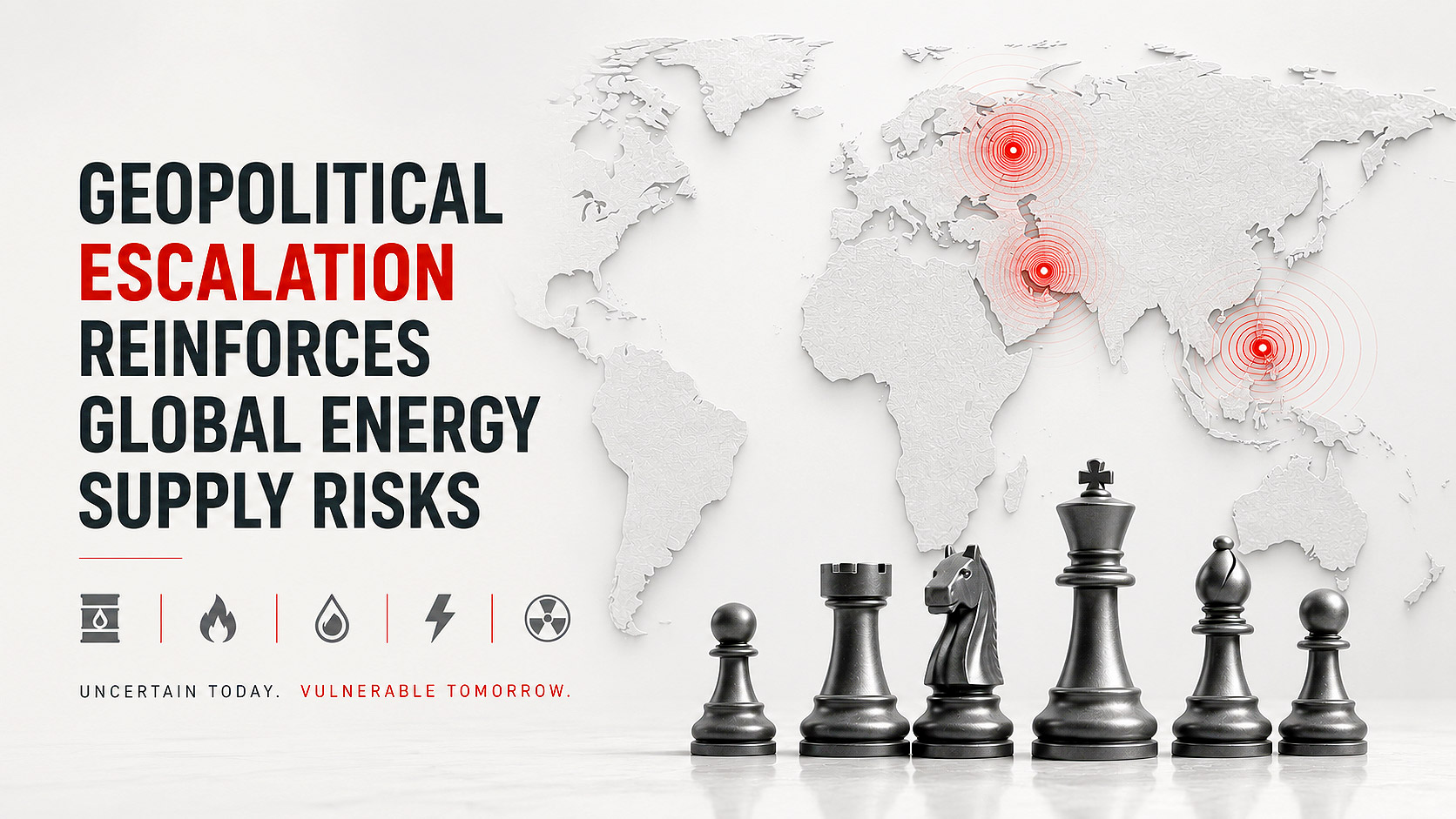
Global energy markets shifted sharply this week from expectations of an LNG oversupply to growing concerns over supply shortages following escalating geopolitical tensions in the Middle East, particularly around the Strait of Hormuz. Brent crude oil rose above USD 85 per barrel, while LNG prices in Asia climbed to USD 19.5/MMBtu as supply disruptions and extreme weather boosted demand. Competition between Asia and Europe for available LNG cargoes intensified, leaving European imports at a two-year low due to relatively weaker pricing.
Meanwhile, OPEC revised its 2026 global oil demand growth forecast downward to 780,000 b/d, reflecting weaker economic activity, although demand is expected to rebound strongly in 2027. Energy companies continued investing in long-term infrastructure, including natural gas pipelines, LNG export terminals, nuclear power, and AI-driven power generation projects, highlighting sustained confidence in future energy demand despite current market volatility. For Tanzania, these developments reinforce the strategic importance of accelerating its LNG project, strengthening domestic energy security, and positioning itself as a reliable future supplier to international markets.
M.M