HORMUZ UNDER FIRE: WHY TANZANIA MUST PREPARE FOR THE NEXT GLOBAL OIL SHOCK
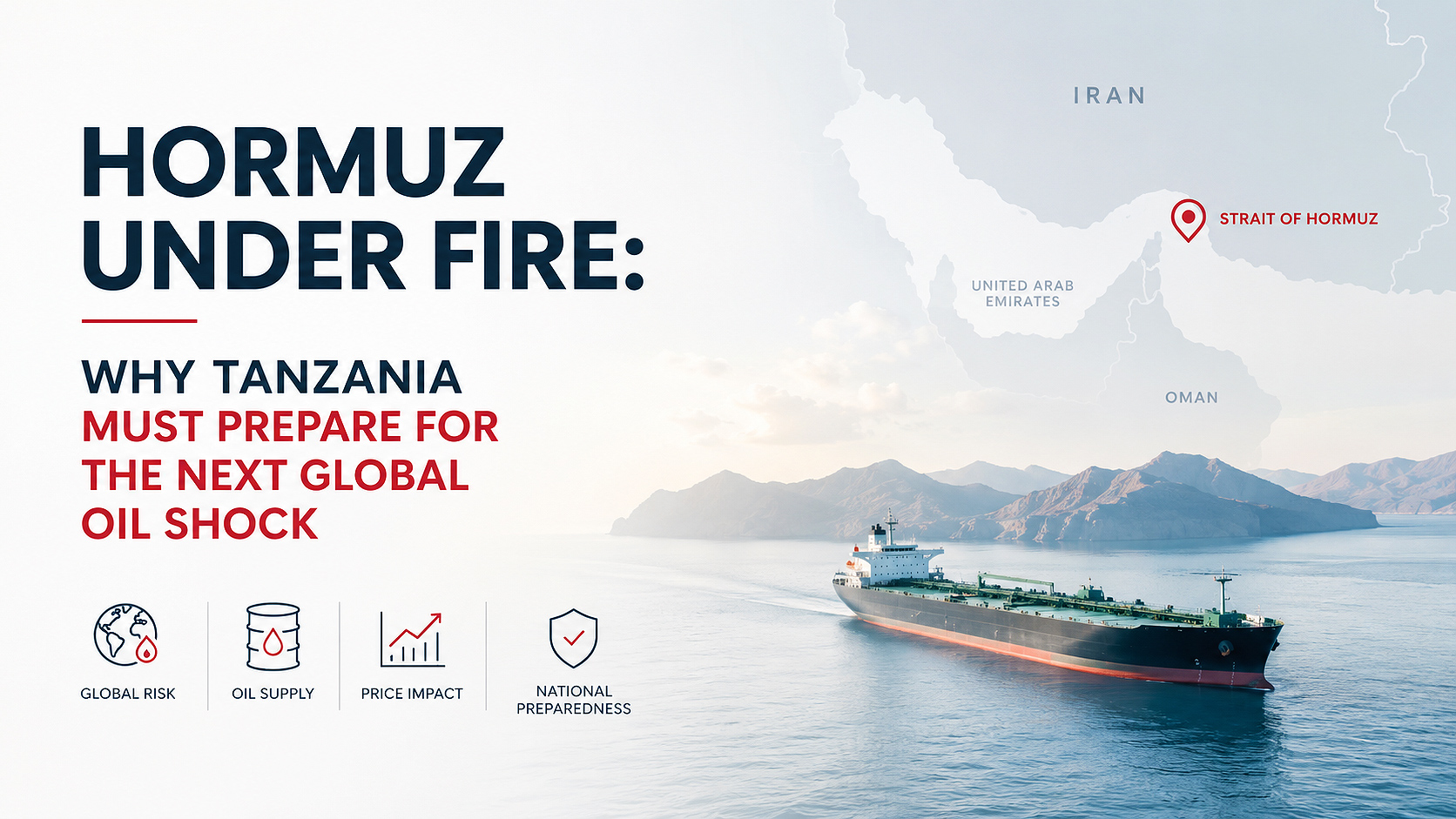
The escalating military confrontation between the United States and Iran has once again placed the Strait of Hormuz at the centre of global attention. Carrying approximately 20% of the world’s crude oil and nearly 20% of global LNG trade, the Strait remains the single most important energy transit route in the world. Since mid-July 2026, repeated attacks on commercial tankers, strikes on critical infrastructure, and growing threats to maritime security have heightened fears of a prolonged disruption that could trigger another global oil shock.
Despite these developments, Brent crude oil continues to trade at around US$86 per barrel. However, market fundamentals suggest that prices could rise sharply should the conflict intensify or shipping through Hormuz remain constrained. The International Energy Agency (IEA) has already warned that failure to restore normal navigation within weeks, not months, could severely disrupt global supplies of oil, natural gas and fertilizers, particularly affecting energy-importing economies across Asia.
The effects are already becoming visible. China’s crude oil imports fell by 41% year-on-year in June 2026 to 7.12 million barrels per day, the lowest monthly level since October 2016, largely due to disrupted Middle Eastern supplies. Meanwhile, Pakistan secured emergency LNG cargoes for 21–22 July 2026 at approximately US$20.7 per MMBtu, illustrating the growing premium that countries are paying to secure reliable energy supplies during periods of geopolitical instability.
The crisis is also spreading beyond the Strait of Hormuz. Rising insecurity around the Bab el-Mandeb Strait, coupled with renewed piracy in the Gulf of Aden, threatens another strategic maritime corridor linking the Indian Ocean with the Suez Canal. If both routes experience sustained disruption, global shipping costs, insurance premiums and energy prices are likely to increase significantly.
For Tanzania, these developments carry important economic and strategic implications. Higher international oil prices would increase the country’s petroleum import bill, raise transportation and electricity generation costs, and place additional pressure on inflation. The increased cost of imported fuel would affect virtually every sector of the economy, from agriculture and manufacturing to logistics and consumer goods, potentially slowing economic growth if the crisis persists.
However, every crisis presents an opportunity. Tanzania’s strategic location along the Indian Ocean, together with the Ports of Dar es Salaam, Tanga and Mtwara, positions the country to strengthen its role as a regional energy and logistics hub. Accelerating investments in strategic petroleum reserves, expanding fuel storage infrastructure, improving port efficiency, and fast-tracking domestic natural gas utilization would significantly enhance Tanzania’s resilience against future global supply disruptions while supporting neighbouring landlocked countries.
The unfolding Hormuz crisis also reinforces the urgency of implementing long-term energy security policies. Diversifying fuel import sources, increasing investment in renewable energy, expanding LNG and natural gas infrastructure, and strengthening regional energy cooperation should become national priorities. Countries that build resilient energy systems today will be better positioned to withstand tomorrow’s geopolitical shocks.
As events continue to unfold, one lesson is becoming increasingly clear: energy security is no longer simply an economic issue, it is a strategic national security imperative. For Tanzania, preparing for the next global oil shock should not begin when prices surge; it should begin now.
M.M