How Tanzania's Public Sector Investments Under President Samia Are Reshaping Economic Growth (2021–2026)
Economic transformation is rarely driven by rhetoric alone. It depends on institutions that generate value, infrastructure that raises productivity, and sustained public investment that expands a country's long-term productive capacity. Tanzania's latest performance figures suggest an attempt to strengthen all three simultaneously.
According to government figures presented under President Dr. Samia Suluhu Hassan's administration, the country's public sector has recorded notable gains since 2021, reflecting a strategy anchored in the 4R philosophy, Reconciliation, Resilience, Reforms, and Rebuilding. The emphasis has been less on short-term stimulus than on expanding the institutional foundations of economic growth.
The most immediate indicator is revenue generation. Government institutions reportedly increased their combined revenue from TZS 637 billion in 2021 to TZS 1.327 trillion by 30 July 2026, representing a 108% increase. While revenue growth alone is not a complete measure of institutional effectiveness, it often signals improvements in operational efficiency, governance, and commercial performance.
Investment has also been substantial. The government reports allocating more than TZS 20 trillion to public institutions during the period, increasing their collective asset base from TZS 67 trillion to TZS 92 trillion, a 37% expansion. If these assets are deployed efficiently, they can strengthen the capacity of public enterprises to deliver services, generate income, and reduce long-term fiscal pressure.
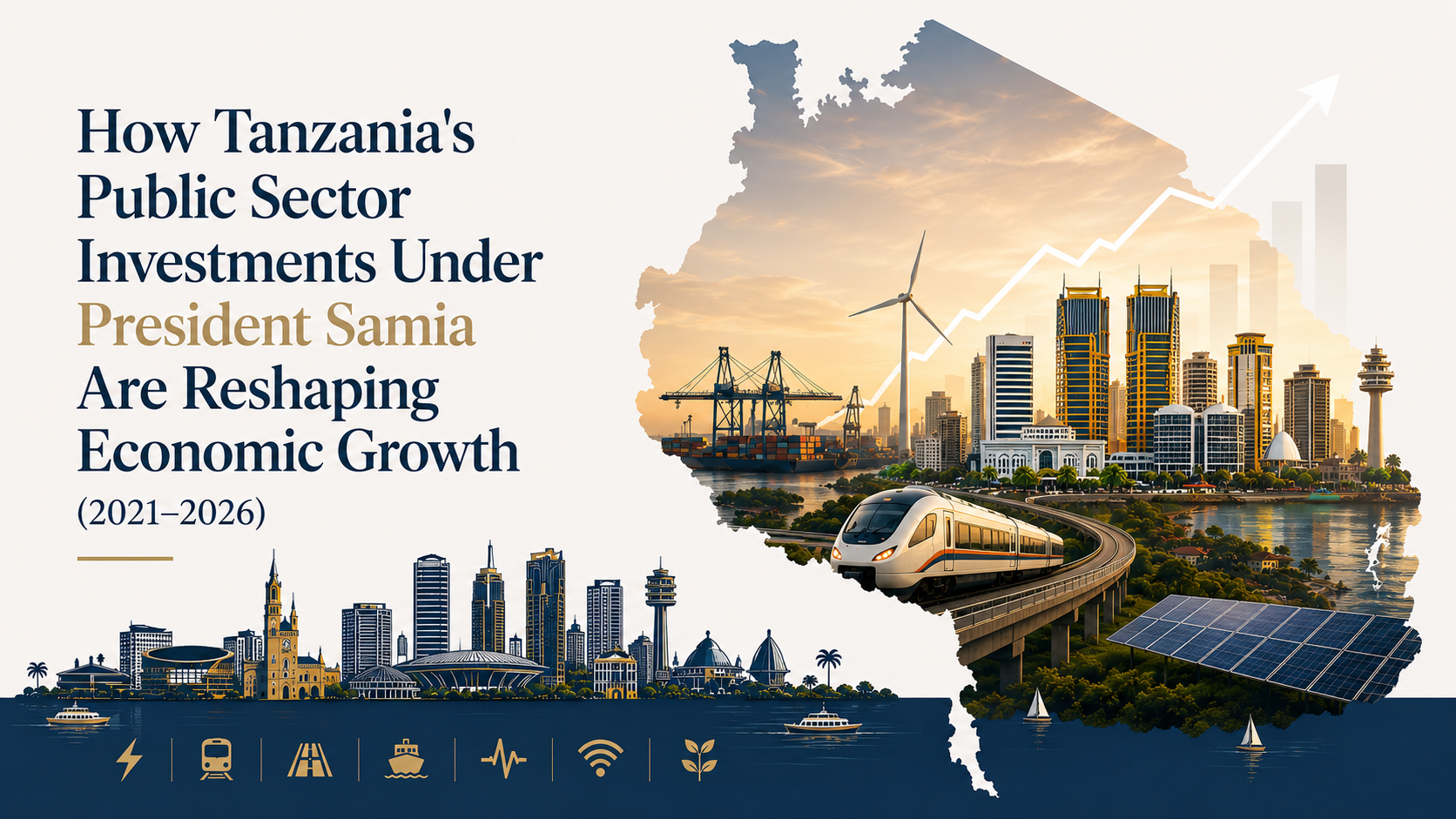
Perhaps the most consequential aspect of the programme is its scale. Strategic investments spanning energy, rail transport, roads, ports, healthcare, digital infrastructure, agriculture, and sports are projected to reach TZS 140 trillion. Such sectors have broad multiplier effects, lowering transaction costs, improving market access, increasing productivity, and enhancing the environment for private investment.
The broader economic question is not merely how much has been spent, but whether these investments translate into durable gains in productivity, employment, and living standards. Large public investments create the greatest value when accompanied by effective governance, transparent implementation, rigorous maintenance, and measurable outcomes.
For investors, policymakers, and development economists, Tanzania's experience illustrates a familiar principle: institutional reform and infrastructure development are complementary rather than competing priorities. Stronger public institutions improve the effectiveness of investment, while modern infrastructure expands the opportunities those institutions can support.
As implementation continues, the ultimate measure of success will be whether improved public-sector performance translates into faster private-sector growth, higher incomes, and broader economic resilience. The reported figures suggest meaningful momentum. Their lasting significance will depend on how effectively today's investments shape tomorrow's economy.
Key Takeaways:
- Government-reported revenue from public institutions increased from TZS 637 billion to TZS 1.327 trillion between 2021 and July 2026, representing 108% growth.
- Public investment exceeding TZS 20 trillion reportedly expanded the asset base of state institutions from TZS 67 trillion to TZS 92 trillion.
- Strategic infrastructure investments across energy, transport, healthcare, digital services, agriculture, and sports are projected to total TZS 140 trillion.
- The government's strategy links institutional reform with long-term capital investment to strengthen national economic capacity.
- The long-term impact will depend not only on the scale of investment but also on governance, implementation quality, and the ability to convert public spending into sustained productivity and inclusive economic growth.