Rare Tanzanian mineral attracts global scientific interest
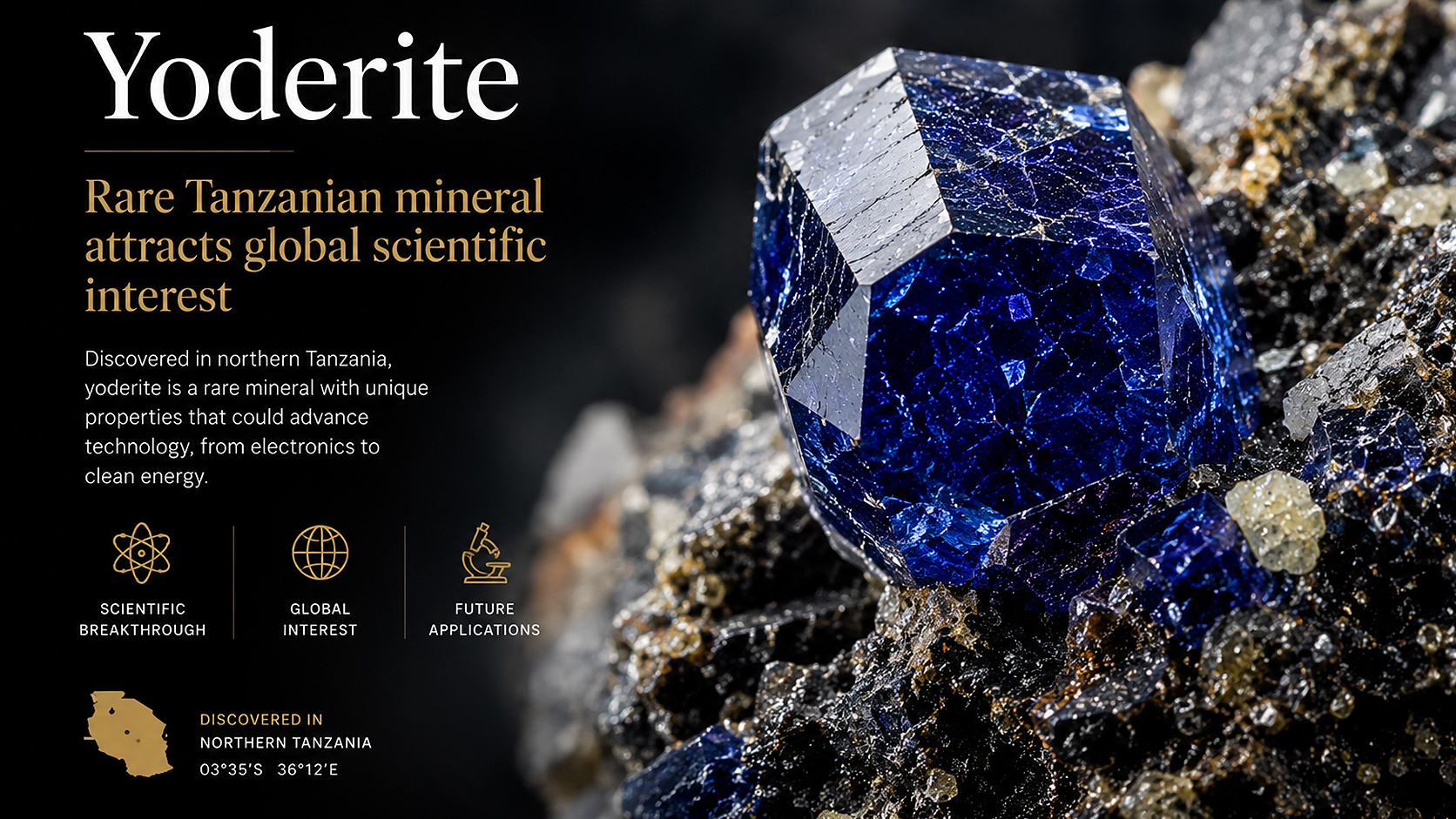
A rare mineral found in central Tanzania is drawing increasing international attention from geologists and researchers, with experts saying it could also help develop the country's geotourism industry.
Yoderite, discovered at Mautia Hill in Kongwa District in 1959, is one of the world's rarest high-pressure metamorphic minerals and has been identified in only a handful of locations worldwide.
Scientists say the mineral formed about 630 million years ago under extreme pressure more than 30 kilometres beneath the Earth's surface before being brought upwards through geological processes.
The mineral was named after American geologist Hatten Yoder Jr. following its discovery in Tanzania.
Solomon Maswi, Geology Manager at the Geological Survey of Tanzania, said Yoderite has little commercial mining value but is internationally important for scientific research.
"The uniqueness of Yoderite has positioned Tanzania as an internationally recognised centre for high-pressure metamorphic research," he said.
Researchers from Tanzania and overseas, including scientists from Germany's University of Göttingen, have studied the site for more than six decades.
Among them is Professor Abdulkarim Mruma, whose research in the early 1980s contributed to international understanding of Tanzania's high-pressure metamorphic rocks.
Experts believe Mautia Hill could also become a geotourism destination, attracting students, researchers and visitors interested in Earth's geological history.
Proposals include creating geological interpretation centres, guided educational trails and stronger partnerships with international research institutions.
Supporters say such initiatives could broaden Tanzania's tourism offering beyond wildlife and beaches while promoting conservation, education and sustainable local economic development.