Tanzania’s Connectivity Market Enters a New Phase as Data, Smartphones and Mobile Money Surge
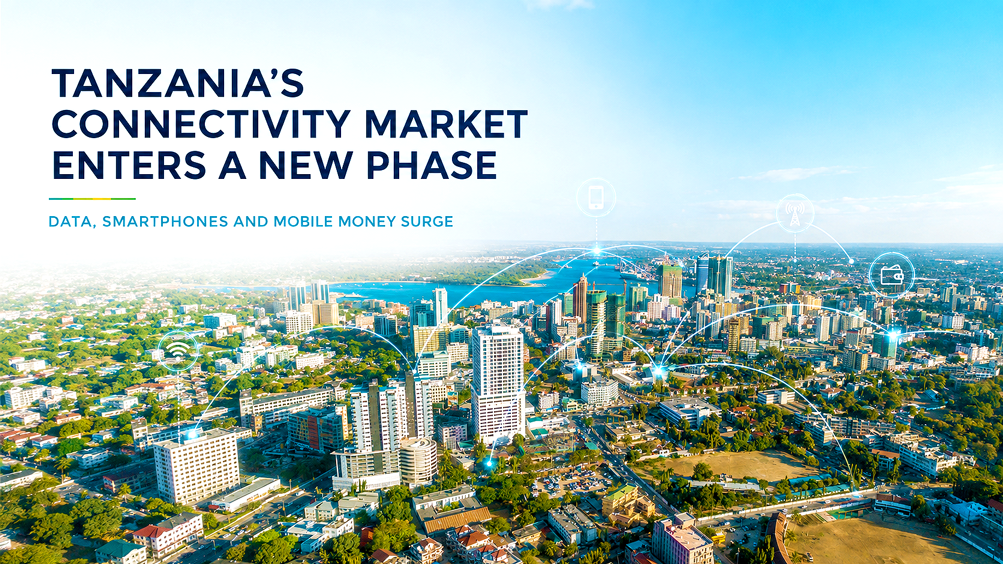
With 117 million mobile connections, 62.79 million internet subscriptions and data consumption exceeding one billion gigabytes, Tanzania’s communications market is rapidly gaining scale. The next challenge is converting extensive network coverage into affordable, productive and secure digital participation.
Tanzania’s digital transformation is accelerating as rising mobile connections, internet subscriptions, smartphone adoption and mobile-money accounts reshape how people communicate, conduct business and access essential services.
The country recorded nearly 117 million registered telephone lines by the end of June 2026, according to the latest quarterly communications-sector report presented by Minister for Communication and Information Technology, Hon. Angellah Jasmine Mbelwa Kairuki. This was a 4.51% increase from 111.91 million connections three months earlier.
Internet subscriptions reached 62.79 million, while quarterly data consumption climbed by almost 12% to 1,041 petabytes—equivalent to more than one billion gigabytes. Smartphone numbers increased by 5.16% to 31.34 million, and registered mobile-money accounts rose by 7.5% to 87.05 million.
Taken together, the figures reveal a communications market that is no longer expanding only through voice connectivity. Tanzania is entering a more advanced stage in which mobile data, digital payments, connected devices and internet-enabled services are becoming central to economic activity.
Key takeaways
Mobile connectivity continues to expand: Tanzania had 116.95 million registered telephone lines at the end of June 2026, equivalent to penetration of 167% of the population.
Internet adoption is gathering pace: Internet subscriptions increased by 6.48% during the quarter to reach 62.79 million.
Data traffic has crossed a significant threshold: Consumption reached 1,041 petabytes, up almost 12% in three months.
The usage gap remains substantial: Although 4G covers 94.39% of the population, smartphone penetration stands at 44.74%.
Mobile money remains a core digital-economy platform: Registered accounts increased to 87.05 million, with 74.5% of active mobile lines linked to mobile-money services.
Advanced connectivity is emerging: Machine-to-machine connections rose to 1.23 million, while 5G population coverage reached 34.18%.
Consumer protection is improving but remains critical: Reported mobile-enabled fraud incidents declined by 25.29% to 7,334 during the quarter.
A mobile market operating at scale
Tanzania’s 167% mobile-line penetration does not mean every citizen owns multiple phones or that the entire population is connected. The figure includes individuals using more than one SIM card, business connections and machine-to-machine lines. It should therefore be read as a measure of registered connections rather than unique subscribers.
Nevertheless, its scale illustrates how deeply mobile services have become embedded in the country’s economy. A mobile connection now supports far more than calls and text messages. It can provide access to payments, e-commerce, education, public information, agricultural services and employment opportunities.
Domestic call traffic also increased by 7.44% during the quarter, indicating that traditional voice services continue to grow even as data-based communication expands.
The more strategically significant development, however, is the rise in internet use. Tanzania added millions of internet subscriptions between March and June, while data traffic grew considerably faster than the number of connections. This suggests that connected customers are not merely gaining access; they are using more digital content and services.
The expansion is being driven by activities ranging from video streaming and social media to online education, digital commerce, employment searches and access to agricultural information.
Network coverage is no longer the only test
Tanzania has made notable progress in extending mobile broadband infrastructure. By June 2026, 3G covered 93.95% of the population and 4G reached 94.39%. Geographically, the technologies covered 76.41% and 77.53% of the country respectively.
The launch of 758 communications towers in April has played an important role in extending coverage. Implemented through cooperation between the government, the Tanzania Communications Regulatory Authority, the Universal Communications Service Access Fund and mobile operators, the project brought improved connectivity to approximately 8.5 million people across 1,400 villages in Mainland Tanzania’s 26 regions. An additional 45 towers have been completed in Zanzibar.
These investments have brought mobile broadband within reach of most Tanzanians. Yet network availability does not automatically translate into meaningful digital inclusion.
Only 44.74% of the population had access to smartphones by June, although this was an improvement from 42.55% in March. The difference between 4G coverage and smartphone penetration exposes Tanzania’s most important digital-policy challenge: the country has built extensive network reach, but many people still lack the devices, affordability and skills required to benefit fully from it.
For operators and policymakers, the focus must consequently broaden from infrastructure deployment to adoption. Affordable smartphones, relevant local content, digital literacy and reliable service quality will increasingly determine the social and economic return generated by network investment.
5G and IoT begin to establish a foothold
Tanzania’s 5G network footprint is also expanding. Population coverage reached 34.18%, although geographic coverage remained significantly lower at 11.34%.
The difference reflects the economics of early 5G deployment, which generally prioritises cities and areas with high population density or strong commercial demand. As adoption develops, the technology could support industries requiring low-latency connections, greater network capacity and the simultaneous operation of large numbers of devices.
Evidence of this transition is already emerging in the machine-to-machine segment. M2M connections increased by 4.28% during the quarter, from 1.18 million to 1.23 million.
While still small compared with consumer mobile connections, this growth points to increasing adoption of connected infrastructure and Internet of Things applications. Potential use cases include logistics, utilities, agriculture, transport, industrial monitoring and automated payment systems.
The commercial significance will depend on whether operators and technology companies can translate network capability into viable industry solutions.
Mobile money strengthens its position
Mobile money remains one of Tanzania’s most important digital platforms. Registered accounts increased from 80.98 million in March to 87.05 million in June.
The figure represents accounts rather than unique customers, since one person may hold accounts with several providers. Even so, the fact that 74.5% of active mobile lines are associated with mobile-money services demonstrates the central position of digital payments in Tanzania’s financial system.
For households, mobile money facilitates transfers, bill payments, school fees and purchases. For businesses, it provides a payment and collection infrastructure that can reduce reliance on cash and extend formal financial activity into communities underserved by conventional banking.
The next stage of development will require providers to move beyond basic transfers towards interoperable merchant payments, savings, credit, insurance and services designed for small enterprises. Trust, pricing transparency and consumer protection will be essential to sustaining adoption.
Falling fraud incidents offer cautious encouragement
Reported fraud and scam incidents conducted through mobile communications declined by 25.29%, from 9,816 in the quarter ending March to 7,334 in the quarter ending June.
The reduction is a positive indicator, but the absolute number remains significant. Rukwa and Morogoro recorded the highest concentrations, with 2,495 and 2,199 reported incidents respectively.
TCRA attributed the wider decline partly to investigations conducted with security and law-enforcement agencies. It has also continued public campaigns encouraging users to protect passwords, personal identification numbers and one-time passcodes; avoid unfamiliar links; and verify information through official channels.
As financial and public services become more digitised, cybersecurity will increasingly become an economic-inclusion issue. Consumers who fear losing money or personal information may be reluctant to adopt new services, regardless of network availability.
Service quality improves, but gaps persist
Overall compliance with communications quality-of-service standards increased from 94.3% in the first quarter of 2026 to 96.4% between April and June.
TCRA conducted assessments across 22 regions and areas, directing operators to address inadequate coverage and data speeds where required. Areas identified for urgent improvement included Dodoma, Geita, Kagera, Katavi, Kigoma, Rukwa and Tabora; the islands of Unguja and Pemba; and parts of Dar es Salaam, including Ubungo and Kigamboni.
Maintaining quality will become more demanding as data traffic increases. Networks must absorb rapidly rising consumption while providing the consistency required for mobile finance, remote work, digital education and business services.
For operators, this means that continued investment in capacity, backhaul infrastructure, spectrum efficiency and network resilience will be as important as extending headline coverage.
From connectivity to productive participation
Tanzania’s quarterly figures present a communications market with strong momentum. Connections are rising, internet use is deepening, digital payments are expanding and advanced network technologies are becoming more widely available.
But the statistics also show where the next policy and investment priorities lie.
The decisive measure of progress will no longer be the number of SIM cards alone. It will be whether connectivity produces higher productivity, better public services, stronger businesses and broader economic opportunity.
Closing the smartphone gap, improving affordability, strengthening digital skills and ensuring online safety will therefore be central to the next stage of Tanzania’s digital development.
The country has already established much of the necessary network foundation. Its next task is to ensure that every available signal can become a meaningful economic connection.