Why Tanzania's Vision 2050 Will Be Won as Much in Embassies as in Boardrooms
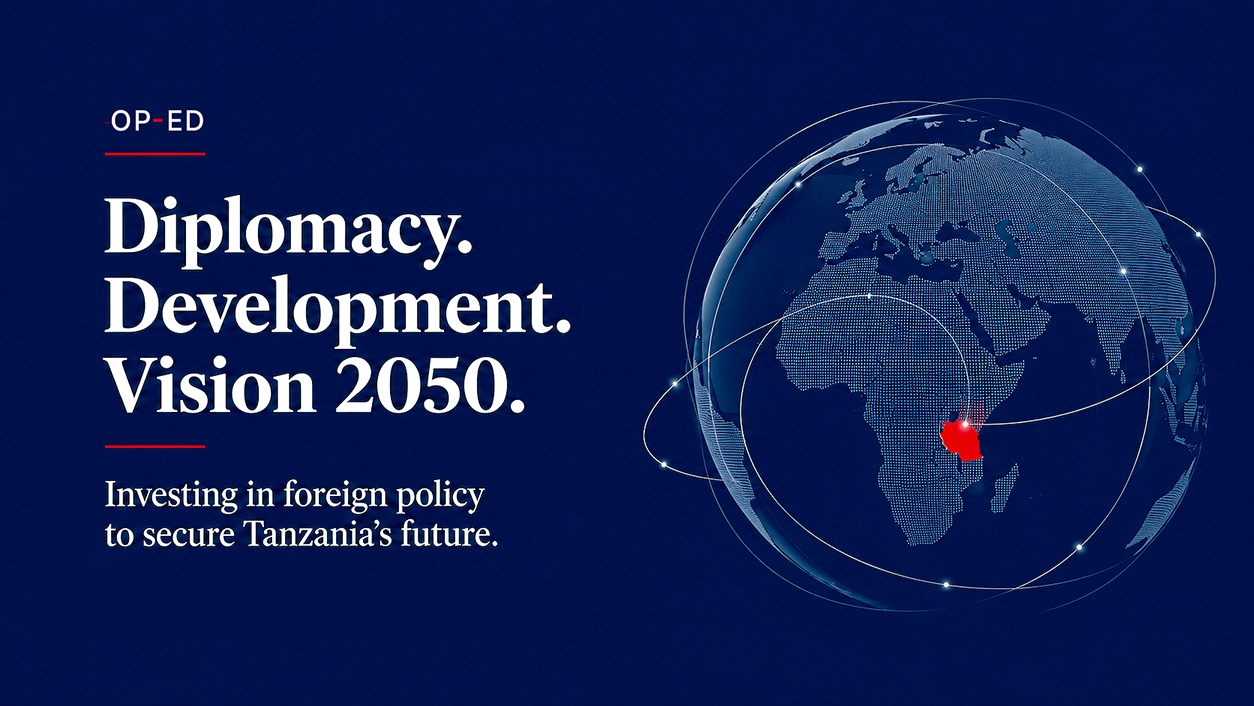
Every nation invests in roads, railways, ports, power plants and digital infrastructure. These projects are visible. They create jobs, improve productivity and stimulate economic growth.
But there is another investment that often receives far less attention, despite having the power to unlock all the others: diplomacy.
Parliament's approval of TSh 359.3 billion for the Ministry of Foreign Affairs and East African Cooperation in the 2026/27 financial year should not be viewed simply as funding for embassies and diplomatic missions. It should be recognised as a strategic investment in Tanzania's long-term economic future.
If Vision 2050 is to succeed, Tanzania must strengthen not only its domestic economy but also its position in the global economy.
The updated Foreign Policy rightly places economic diplomacy at the centre of national development. That reflects an important reality: modern diplomacy is no longer only about political relations, it is increasingly about attracting investment, expanding exports, promoting tourism, securing technology partnerships and creating opportunities for businesses.
The world's fastest-growing economies understood this long ago.
Singapore became a global trading hub through international connectivity.
South Korea transformed itself by exporting manufacturing and innovation.
The United Arab Emirates built global investment networks.
Rwanda has positioned itself as one of Africa's leading destinations for innovation and business.
Their success did not happen within national borders alone. It was built through active engagement with the world.
Tanzania possesses equally compelling advantages.
It is strategically positioned as a gateway to Eastern, Central and Southern Africa. It enjoys political stability, abundant natural resources, expanding infrastructure and one of the continent's most widely spoken languages. Combined with projects such as the Standard Gauge Railway, modern ports and regional transport corridors, these assets create enormous opportunities.
The challenge is converting those advantages into investment, trade and technology transfer.
That is where diplomacy becomes a powerful economic tool.
Every embassy should function as an investment promotion office.
Every diplomatic mission should actively identify export opportunities for Tanzanian businesses.
Every bilateral engagement should seek partnerships in innovation, education, manufacturing and infrastructure.
Success should increasingly be measured not by the number of diplomatic meetings held, but by the investment secured, markets opened, technologies transferred and jobs created.
Equally important is Tanzania's global reputation.
For decades, the country has been recognised for peace, stability and constructive international engagement. Those qualities are not only diplomatic strengths—they are economic assets. Investors seek predictable environments. Businesses expand where confidence exists. Development partners collaborate where institutions demonstrate credibility.
Foreign policy therefore becomes an extension of economic policy.
Vision 2050 also demands greater attention to technology diplomacy. The industries that will define the future, artificial intelligence, biotechnology, renewable energy, digital finance and advanced manufacturing, are built through international collaboration. Tanzania must position itself within these global innovation networks if it is to compete over the next generation.
The Tanzanian diaspora represents another strategic advantage. Thousands of Tanzanians working abroad possess valuable expertise, investment capital and global networks. With the right policies, they can become important contributors to industrialisation, entrepreneurship and knowledge transfer.
Ultimately, Vision 2050 will not be achieved by domestic reforms alone.
It will require Tanzania to compete confidently on the global stage, build stronger international partnerships and ensure that diplomacy delivers measurable economic outcomes.
The road to Vision 2050 does not end at Tanzania's borders.
It begins there.
The countries that shape the future will not simply build stronger economies at home, they will build stronger relationships across the world. Tanzania has every opportunity to be one of them.